The Sign at Old Mill Preserve Says $429,990. That's Not What Buyers Are Paying.
October 1, 2026
October 1, 2026
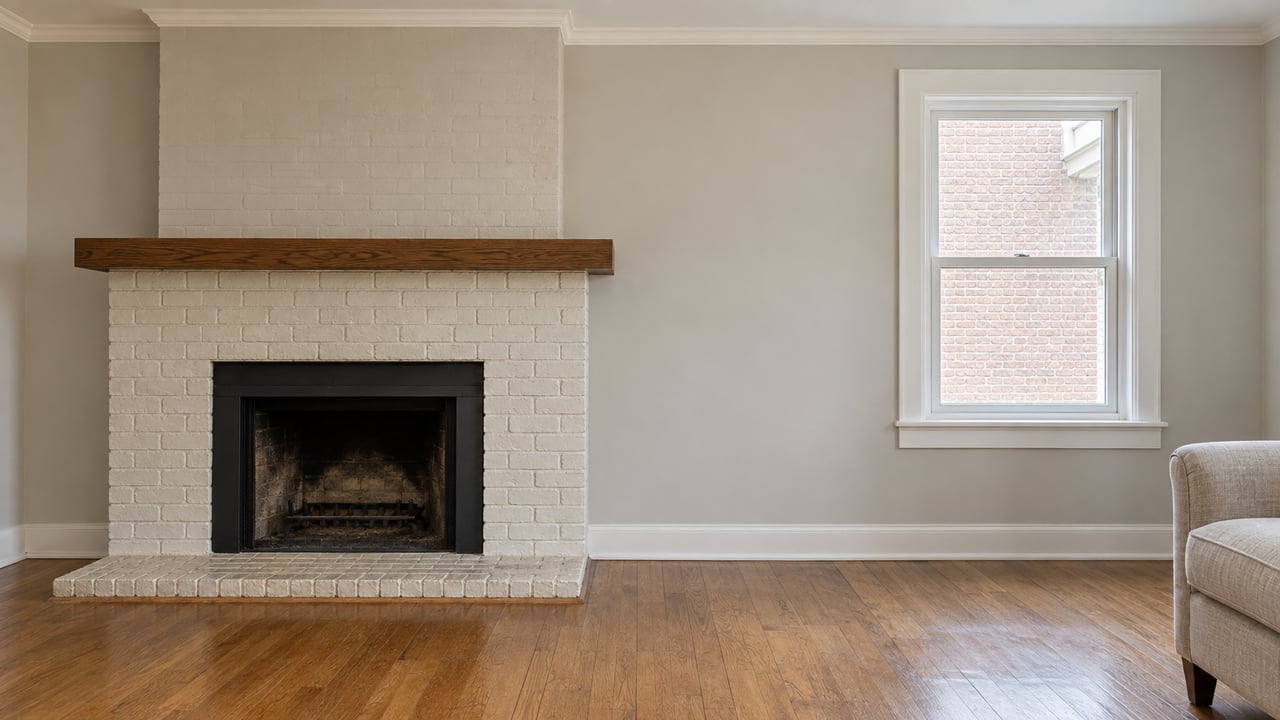
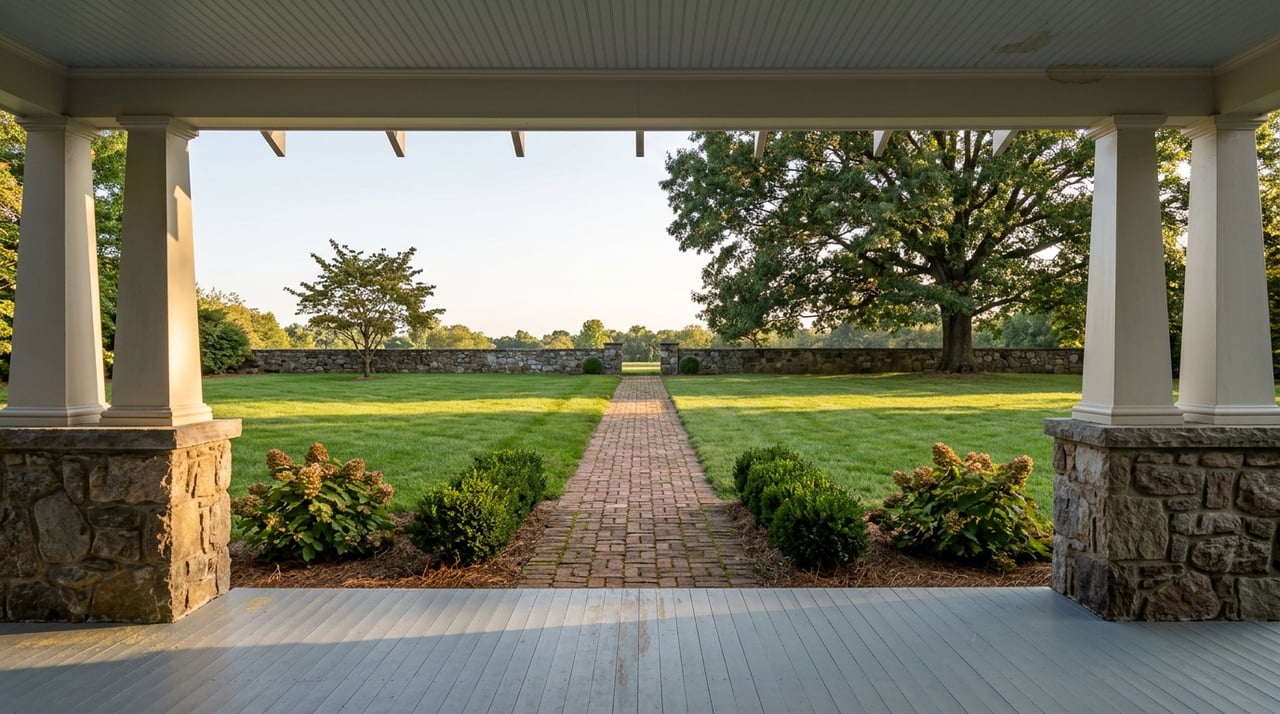
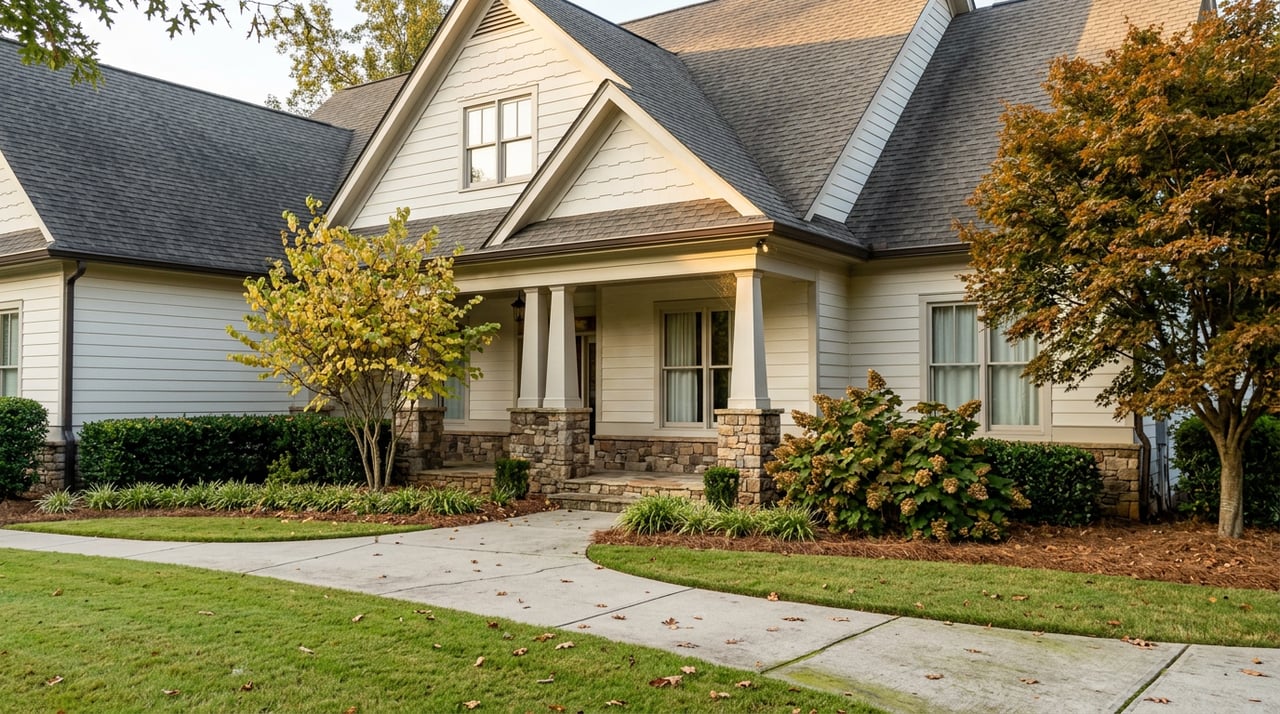
On Barnfield Way in Dallas, the clubhouse at Old Mill Preserve used to be a farmhouse. David Weekley Homes kept the original structure when it built the 55-and-up community on what had been a family orchard, and turned the house into a gathering spot for the 130 homesites now filling in around it. The community opened to the public in June 2025, and by mid-2026 the pool, cabana, dog park and pickleball courts were finished and in use. Listed pricing across the community runs from $429,990 to $597,786.
That number on the sign is real. It is also not the number most buyers walking through the model home end up paying, and it is not the number a resale seller three streets over in older Dallas should assume they are competing against. The gap between the two is the part of this market worth understanding before you sign anything, whether you are choosing between new construction and resale or trying to price a home that sits within driving distance of a builder with standing inventory to move.
Paulding County has an unusual amount of active new-home construction for a market this close to Atlanta, with builders including Meritage, Fischer Homes, Smith Douglas, DR Horton and David Weekley all building product in and around Dallas. When any of these builders needs to move a finished, unsold home, the instinct used to be a price cut. That instinct has largely disappeared, and the reason has nothing to do with demand holding up. It has to do with what a price cut does to everyone who already closed.
Drop the base price on a standing home in a community, and every neighbor who paid full price a month earlier now owns a house worth less on paper. Public records show the new lower sale, appraisers use it as a comp, and every remaining home in that phase gets measured against it. A builder carrying a construction loan and a quarterly delivery target has strong reasons to avoid that outcome. So instead of touching the price, builders spend money on things that never show up in the sale price at all: a rate buydown, a closing cost credit, a design center allowance.
The mechanics are straightforward. A 2-1 buydown, for example, might take a loan quoted around 6.5% and bring it to 4.5% in year one and 5.5% in year two before it reverts to the full rate for the remaining term. On a $400,000 loan, that structure has been shown to shave roughly $500 off the monthly payment in the first year compared to the third. The buyer feels an immediate difference at the exact moment affordability is tightest. The builder's price sheet never changes.
That is the whole point. A buyer shopping on monthly payment, which is most buyers right now, gets the deal they need. The builder gets to advertise the community at full value. Neither the buydown nor a closing cost credit nor a design allowance shows up as a discount in the county's public sale records, which means anyone comparing prices later, an appraiser, a resale seller, a buyer's agent pulling comps, sees a number that looks steadier than the actual deal that was made.
Here is what typically moves the payment without ever touching the recorded price:
| Incentive | Who funds it | Appears as a price cut in public records? |
|---|---|---|
| Temporary rate buydown (2-1 or similar) | Builder or builder's lender | No |
| Permanent rate buydown | Builder | No |
| Closing cost credit | Builder | No |
| Design center allowance | Builder | No |
| Straight price reduction | Builder | Yes |
Only the last row resets the comps. That is exactly why builders reach for the other four first.
Zillow's tracking for the 30157 zip code, where Old Mill Preserve sits, put the average home value at $329,705 as of the end of July 2026, down just half a percent from a year earlier, with homes going to pending in around 41 days. Read on its own, that looks like a market holding roughly steady. Read alongside what is happening inside communities like Old Mill Preserve, it reads differently. A zip code loaded with active new-home inventory can show a flat average value while the builders inside it are quietly discounting the actual cost of ownership through incentives that never touch the recorded price. The average holds because the mechanism that would move it isn't being used.
That matters most for anyone selling an older resale home in the same commuting radius. If your listing sits in a school zone or price band that also has a builder with standing inventory nearby, you are not competing against that builder's sticker price. You are competing against whatever payment a rate buydown and a closing credit currently produce, and that number is not published anywhere you can look it up. You have to ask.
The practical move is to find out what incentive package a nearby new-construction community is currently running before you assume your pricing is competitive. Sales offices will usually share the current buydown rate and credit amount if you ask directly, because it is public information they are actively marketing. Once you have it, the comparison is a payment comparison, not a price comparison: what would a resale buyer's monthly cost need to look like, at prevailing market financing, to match what the builder down the road is currently offering.
A resale home carries things a spec home doesn't. Mature landscaping, window treatments, an established yard, no construction traffic for the next few years, and often a shorter school commute once a new phase finishes building out. Those are real advantages, but they only work in your favor if a buyer has actually done the payment math and knows what they're weighing them against. Spelling that out in your listing remarks does the buyer's arithmetic for them instead of leaving them to compare a sticker price to a sticker price and wonder why the new build feels cheaper to own.
Ask for the incentive package in writing, not as a verbal estimate from a sales counselor. Get the base price of the smallest available move-in-ready home, since that is usually the number your comparison should run against, not the model home's fully upgraded price. Ask whether the buydown is temporary or permanent, because a temporary buydown means budgeting for the higher payment once it expires, while a permanent buydown changes the math for the life of the loan. If you plan to stay in the home long enough for that difference to matter, the permanent version is usually worth more to you than a same-dollar closing credit, even though the credit feels bigger at the closing table.
Design center credits deserve a second look before you count them as savings. They're restricted to the builder's own vendors and selections, and an appraiser evaluating market value doesn't necessarily credit cosmetic upgrades dollar for dollar. Ask yourself whether it's something you would have paid for anyway, at retail, rather than treating the credit itself as free money.
Is Old Mill Preserve open to any buyer, or only to retirees? It's an age-restricted 55-and-up community built under David Weekley's Encore brand, so it's a relevant comparison point mainly for buyers in that age range, not for families comparing school zones.
Does an incentive package show up anywhere a buyer or seller can check it? Not in the recorded sale price. Appraisers are required to adjust comparable sales for known concessions, but that adjustment happens inside the appraisal file, not in the public record most buyers and sellers pull comps from.
Should I ask a builder for a straight price cut instead of an incentive package? It depends on how long you plan to keep the loan. A price cut lowers your loan balance, your taxes and your insurance basis permanently, which usually wins if you're staying seven years or more. A credit or buydown often puts more usable cash or monthly breathing room in your hands sooner, which can matter more if your horizon is shorter.
Comparing a builder's incentive sheet against a resale listing down the street is exactly the kind of math we run before a client decides which offer actually gets them further. If you're weighing a new-construction contract in Paulding County against a resale home, or pricing one to compete with a builder that has incentives to spend, The Calvert Group can walk through the payment-equivalent numbers with you before you sign anything.
Stay up to date on the latest real estate trends.
Connect with The Calvert Advantage for a real estate experience that goes beyond the ordinary. Whether you're interested in exclusive listings, exploring your home's value, or diving into our personalized services, let's connect to make your real estate aspirations a reality.